
Why Do People Leave Manufacturing? 5 Most Common Reasons Management Does Not See
Every resignation has a story. Explore the five most common reasons people leave manufacturing companies, and what management should focus on before individual departures become a long-term problem.
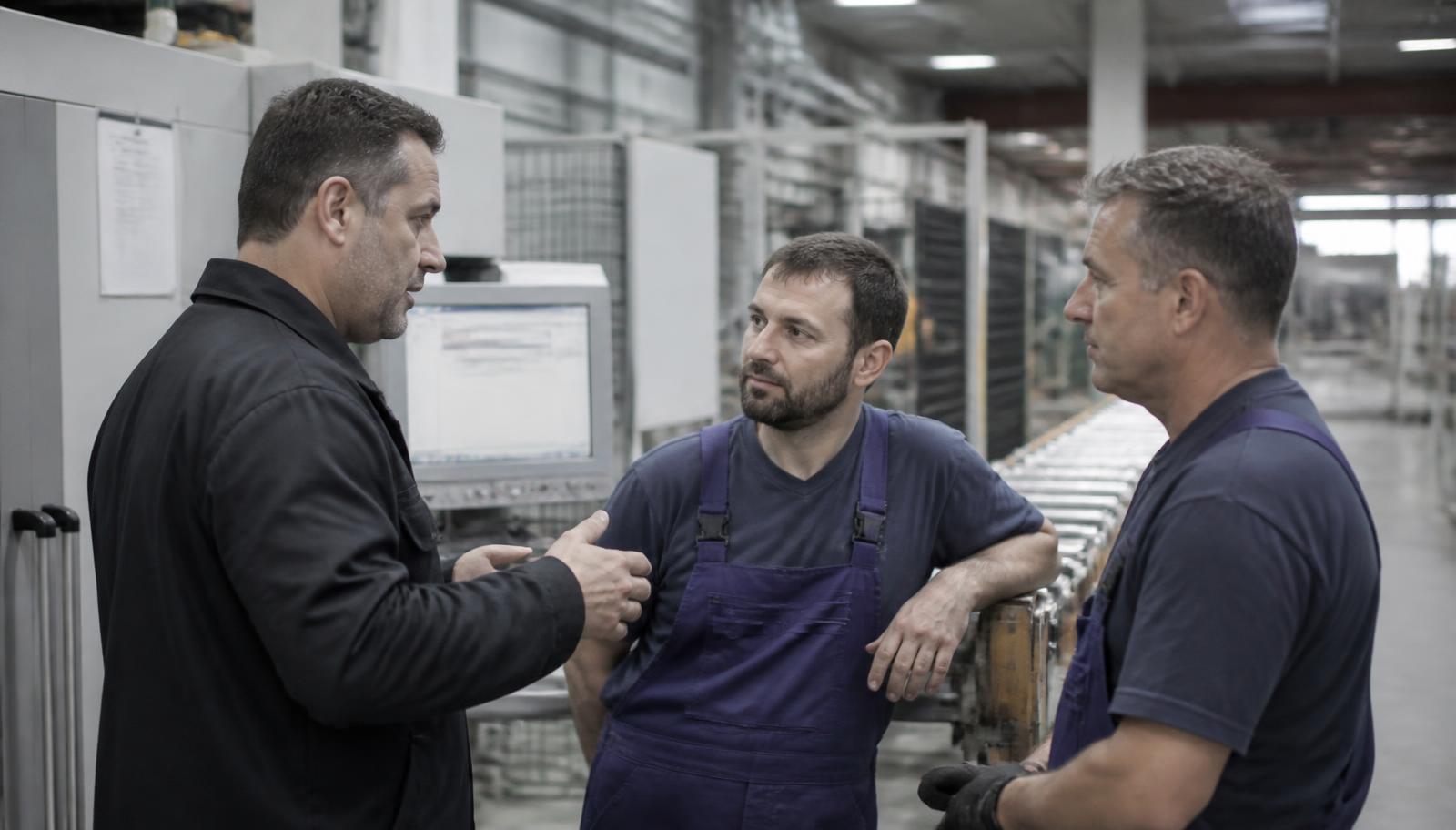
Every resignation has its story. Some come unexpectedly, others can be predicted weeks or even months in advance. In manufacturing companies, once an employee leaves, the natural focus is on who will replace them. Recruitment starts, training for the new worker is prepared, and a way is sought to keep production running without interruptions.
That is a completely natural reaction. Production does not stop and the vacant position has to be filled as soon as possible.
Far less attention, however, is paid to the question of why an experienced employee decided to leave. It is the answer to this question that can help a company reduce turnover more effectively than constantly hiring new people.
In most cases there is not a single reason. The decision to leave is often preceded by a series of events and problems that gradually accumulate within the company.
In this article we look at the five most common reasons why people leave manufacturing companies, and what management should focus on before individual departures turn into a long-term problem.
Why does turnover in manufacturing repeat despite constant recruitment?
When an employee leaves, the first step is usually to look for a replacement. That is understandable. Production needs to continue and the vacant position must be filled as soon as possible.
However, if resignations repeat at the same workplaces or in the same teams, it is worth looking deeper. Turnover usually does not arise because of a single event. It is the result of several factors that gradually affect employee satisfaction.
The biggest problem is rarely the shortcomings themselves. The problem arises when a company overlooks them for a long time or postpones addressing them. At first one employee leaves, later another. Management often perceives the situation as isolated cases, but in reality it may already be the beginning of uncontrolled turnover.
Once this trend is fully developed, stopping it tends to be considerably more demanding and more costly than addressing the first warning signals.
Five most common reasons why employees leave manufacturing
1. The first days in the company did not meet their expectations
The first days decide much more than many companies realise.
If a new employee does not know what is expected of them, has no support from a more experienced colleague, or feels left on their own, they can very quickly lose the motivation to continue.
A well-prepared onboarding is not a formality. It is one of the first steps towards building a stable team.
2. Chaotic work planning
Constant changes to schedules, unbalanced team workloads or repeated overtime can lead to fatigue and frustration over time.
Employees need a sense of certain stability. If the work regime keeps changing or shortages are repeatedly solved at the last minute, dissatisfaction gradually grows.
Not everyone leaves immediately. Some, however, start thinking about changing jobs.
3. The most reliable people get the most work
In manufacturing it often happens that everyone turns to the reliable workers.
They help new colleagues, cover for absent workers and handle situations when problems arise.
In the short term it works.
In the long term, however, it can lead to fatigue, frustration and the feeling that the company takes their commitment for granted.
4. Lack of communication
People need to know what is expected of them, why certain decisions are made and where the company is heading.
If communication happens only when a problem occurs, employees may feel that nobody is interested in their opinion.
Open communication alone will not prevent turnover. It can, however, reveal problems before they grow into a decision to leave.
5. Small problems that are never solved
It is not always one big event that decides.
More often it is a number of minor problems:
- recurring organisational mistakes,
- malfunctioning work equipment,
- conflicts between workers,
- unclearly divided responsibilities,
- the feeling that nothing changes.
Each of these problems may seem negligible.
Their combination, however, gradually creates an environment in which employees stop seeing a reason to stay.
From practice
In manufacturing companies we often see that once an employee leaves, the replacement is addressed immediately. That is understandable, because the production plan does not stop.
The analysis of the reasons for leaving, however, is often postponed or the company never returns to it at all. If this approach repeats over a long period, individual resignations can become a regular phenomenon that starts to affect the stability of the whole team.
Real improvement does not come from faster recruitment. It comes from understanding the reasons why experienced people leave.
How to recognise that the problem is getting worse?
Turnover rarely appears without warning.
In most cases a company receives signals long before an experienced employee hands in a resignation.
The most common ones include:
- repeated departures from the same workplace,
- an increased number of resignations during the probation period,
- departures of experienced workers,
- a growing amount of overtime caused by a lack of people,
- repeated recruitment for the same positions.
Each of these signals does not necessarily mean a serious problem yet.
If they appear regularly, however, and the company does not address them for a long time, they can be the beginning of uncontrolled turnover.
What can a manufacturing company do before it starts hiring new employees again?
With every resignation it is natural to start looking for a replacement.
If a similar situation repeats regularly, however, it is worth stopping for a moment and asking a few questions.
- Are employees leaving from the same workplace?
- Do the same reasons repeat in the departures?
- Does the onboarding of new workers work?
- Are the team leaders prepared to lead their teams?
- Do employees have the opportunity to point out problems before they decide to leave?
The answers to these questions often show more than the number of resignations itself.
Many companies invest considerable resources into recruiting new people, yet devote only a small part of their time to analysing the reasons for departures. Not because they do not want to address the problem, but because the day-to-day operation of production always comes first.
That is exactly why it is important to find room for understanding the real causes as well.
Conclusion
Turnover is not a problem that arises overnight.
In most manufacturing companies it is the consequence of several factors that gradually accumulate and remain unresolved.
The good news is that many of these causes can be revealed before they show up as an increased number of resignations.
The best way to reduce turnover is not to hire new people faster. It is to create an environment in which the experienced ones have no reason to leave.
What you can do today
If employee departures repeat in your company, try asking yourself a few simple questions today.
- Do resignations repeat at the same workplace or on the same shift?
- Do you know the real reasons for the last three departures?
- Does a new employee have the support of an experienced colleague during the first weeks?
- Do the team leaders talk to employees even when no problem has occurred?
- Are there minor problems in the company that repeat for months without a solution?
If you hesitated on any of the questions, it may be the right time to look at the causes of turnover in more detail.
What we recommend reading next
If this topic interests you, we recommend continuing with these articles:
How much does employee turnover cost?How Much Does Employee Turnover Cost? Most Companies Underestimate the Real Cost9 min readWhy employees leave?Onboarding in Manufacturing: Why the First Days Decide Whether a New Employee Stays6 min readOnboarding in manufacturing: Why the first days decide whether a new employee stays (coming soon).
Questions about this topic? See the Knowledge Centre FAQ.
Related topics
- Workforce management
- Employee retention
- Employee turnover
- Onboarding
- Shift planning