
Interchangeability in manufacturing: Why it is dangerous when only one person can run a critical workstation
A strong team is not one that contains irreplaceable people. A strong team is able to preserve their know-how.
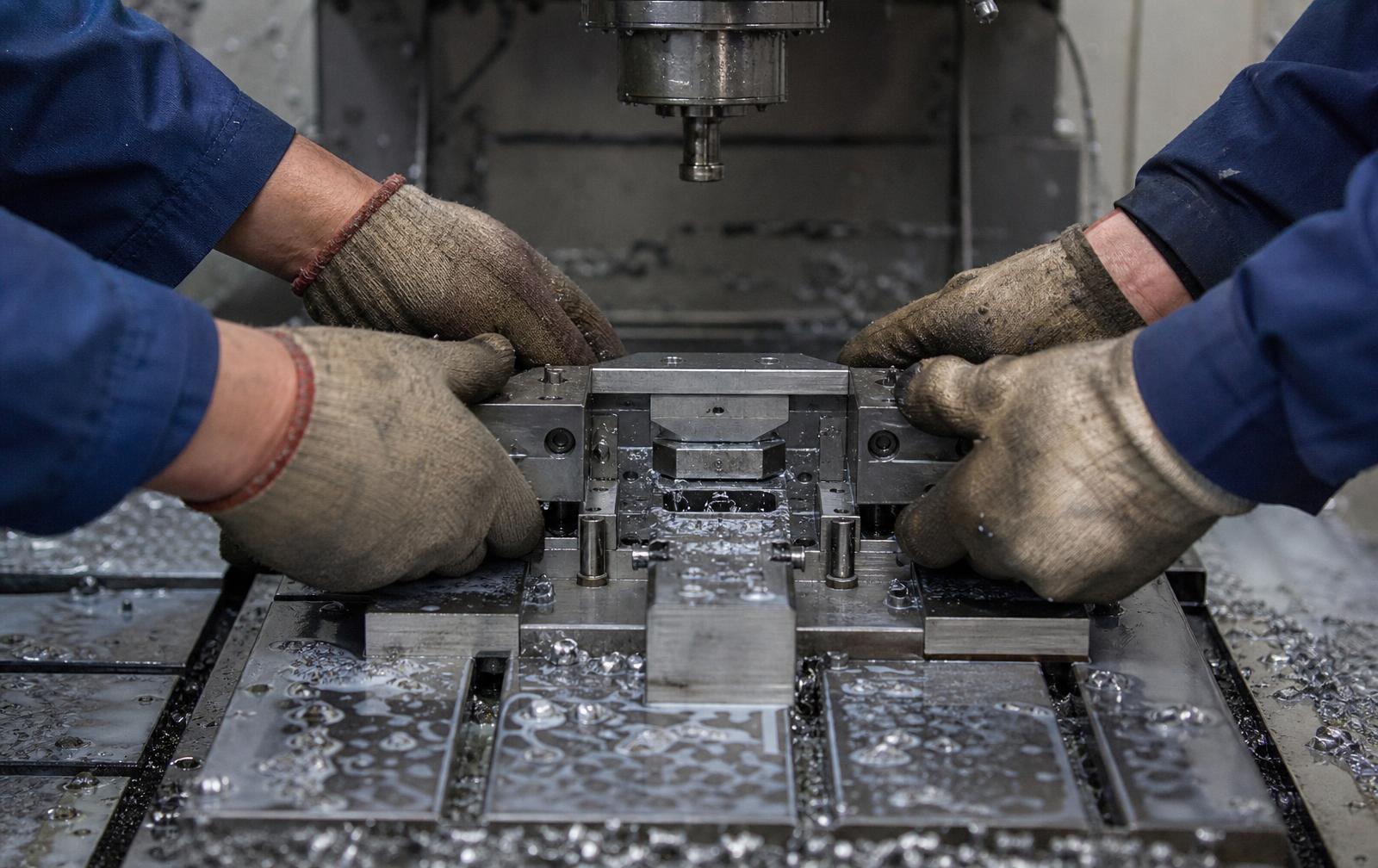
When one person is away and the whole workstation goes with them
On the production line there is a worker who knows one particular machine better than anyone else. They can set it up, they know its weak points, they react quickly when something drifts, and colleagues turn to them whenever a problem appears.
For the company such a person is enormously valuable. The risk appears the moment they are also the only one able to do that work independently.
Illness, holiday or an unexpected departure is enough. The production plan stays the same, the machine is ready, the material is at the workstation, but the person who can operate it safely and reliably is missing.
That is when it becomes clear the problem was not a shortage of workers. The problem was that the process depended on one specific person.
The number of workers does not yet mean interchangeability
A company can have enough people on a shift and still be vulnerable in staffing terms. What matters is not only the number of workers, but also how their competencies are distributed.
If ten operators can work at ordinary positions but only one can set up a critical machine or carry out a specific operation, the absence of that person can affect the performance of the entire shift.
Interchangeability therefore cannot be judged by the total number of people. It has to be assessed for specific workstations, machines, operations and shifts.
Interchangeability cannot be judged by the total number of people. It has to be assessed for specific workstations, machines, operations and shifts.
The biggest risk is often hidden in know-how
A formal work instruction need not contain everything an experienced worker has gained over the years. They know how the machine behaves with a particular material, which setting tends to be sensitive, or what to check before a problem even appears.
Such know-how is highly valuable, but as long as it stays only in one person's head, the company does not have it under control. Interchangeability is therefore not only a matter of training a second worker. Capturing practical experience, working procedures and critical points has to be part of the process too.
The competency matrix should be a working tool
A competency matrix can show very quickly where a company depends on individuals. The condition is that it reflects the real state of production. If it is updated only before an audit, or contains training records that no longer correspond to the worker's actual ability to perform the operation independently, it provides a false sense of security. At every critical workstation it should be clear who can handle it independently, who needs supervision and who is still being trained on it.
Interchangeability has to work on the specific shift
Even a good competency matrix will not help if all the interchangeable workers are scheduled on a different shift. When allocating people it is therefore necessary to watch whether every shift has sufficient coverage of critical competencies. Night and weekend shifts in particular can be more vulnerable, because the options for a quick replacement are limited. That is one of the reasons why two shifts with the same number of workers need not have the same resilience to an outage.
Cross-training: more options without an unnecessary buffer
One of the most practical ways to build interchangeability is cross-training. A worker gradually masters another workstation or operation they can take over if needed. The goal is not for everyone to be able to do everything. It is far more effective to create adequate coverage of critical positions and to plan training deliberately.
Training is not enough. Competency has to be maintained
A worker may have completed the training, but if they have not performed the operation for a year, their actual readiness can be completely different.
At critical positions, recording the date of training is therefore not enough. The company needs to know whether the worker performs the activity often enough to be able to take it over safely when a colleague is absent. That is the difference between recorded and real interchangeability.
The company needs to know whether the worker performs the activity often enough to be able to take it over safely when a colleague is absent.
What happens when interchangeability is missing?
The first solution is often improvised. The shift supervisor moves an experienced person from another workstation, calls in a worker from another shift or asks someone for overtime. Production continues, so the problem may look solved from the outside. In reality it has only moved.
From practice
The greatest dependence on one person often develops unnoticed. An experienced worker is reliable, so they get the more demanding tasks. When a problem appears, they are the one who is called. When someone needs to be trained, they help again. Step by step they become the person without whom the workstation runs considerably worse. The company knows their value, but has at the same time created a risk that only shows in full during their absence.
Interchangeability and shift planning belong together
Interchangeability cannot be built separately from shift planning. Information about who can do what has to be usable in the everyday allocation of workers. If the planner or shift supervisor sees only the number of people and not their competencies, they can create a shift that looks sufficient in capacity terms but falls apart at the first outage.
How to plan shifts in manufacturing correctly and handle unexpected worker outagesHow to plan shifts in manufacturing correctly and handle unexpected worker outages7 min readWhere an external partner can help
External capacity on its own will not solve a lack of internal know-how. In some production operations, however, it can help free experienced internal workers from simpler activities and allow the company to concentrate them on critical positions. In other cases a stable external team can create an additional staffing buffer for workstations where workers can be trained systematically. At FLEXIVIO we work with manufacturing companies on building stable teams and staffing capacity. The point of such support is not to replace internal know-how, but to help the company create room so that not every absence or change in production volume is solved by moving the same key people around.
Which workstations are critical for the company?
First it is necessary to identify the workstations where the loss of a specific competency can slow down or stop production.
- workstations requiring a specific authorisation or certification,
- machine setup and changeovers,
- operations requiring longer experience,
- inspection or quality activities without which the product cannot move on,
- maintenance interventions tied to specific technical know-how,
- positions where the company repeatedly looks for a replacement at every absence.
How to decide where to start
- Select the workstations whose non-staffing can stop or significantly slow down production.
- For each of them, count the workers who can staff it independently today.
- Check on which shifts those people are actually available.
- Identify the positions where only one fully qualified worker exists.
- Choose suitable people for cross-training.
- Capture the practical know-how of experienced workers before you need it during their absence.
What you can do today
Try looking at your production through one simple question: which people would you miss most tomorrow?
- Write down five workstations where the absence of one specific person would cause the biggest problem.
- Verify whether a real replacement exists for each of them on the same shift.
- Check when that replacement last worked at the workstation.
- Compare the competency matrix with what the shift supervisors actually think.
- Pick one critical position and plan a concrete step to increase its interchangeability.
- Find out which practical know-how exists today only in individual people's heads.
Conclusion
A manufacturing company does not need every worker to master every workstation. It does, however, need to know which competencies are critical for production continuity and what happens when a specific person is not available.
Interchangeability reduces the pressure on shift supervisors, limits the need for improvised transfers and overtime, and makes shift planning more resilient to absences.
A strong team is able to preserve their know-how and create the conditions for production not to rest on one person.
What we recommend reading next
How to plan shifts in manufacturing correctly and handle unexpected worker outagesHow to plan shifts in manufacturing correctly and handle unexpected worker outages7 min readOvertime in manufacturing: When it helps and when it signals badly set capacityOvertime in manufacturing: When it helps and when it signals badly set capacity8 min readUnreported absences in manufacturing: How they affect the production plan and what a company can doUnreported absences in manufacturing: How they affect the production plan and what a company can do5 min readOnboarding in manufacturing: Why the first days decide whether a new employee staysOnboarding in Manufacturing: Why the First Days Decide Whether a New Employee Stays6 min readQuestions about this topic? See the Knowledge Centre FAQ.
Related topics
- Cross-training and interchangeability
- Workforce planning
- Shift planning
- Workforce management
- Onboarding
- Manufacturing productivity